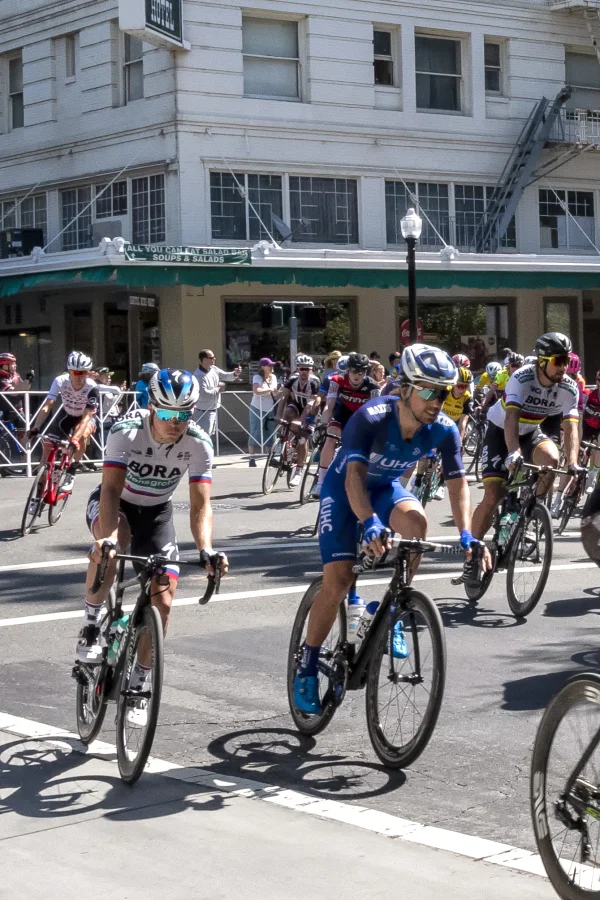
Mental training for cyclists is the difference between finishing strong and pulling off the road with five kilometres to go. Elite cyclists spend enormous time training their minds — developing focus under fatigue, managing suffering, and building the race-day confidence that allows them to execute when it counts most.
Why Mental Training Matters as Much as Physical Training
Your legs produce the power, but your brain decides whether to keep going. Research in sports psychology consistently shows that perceived effort — not actual physiological capacity — is the primary limiter for most cyclists. You slow down or stop when your brain decides the effort is unsustainable, often well before your muscles are truly exhausted.
This is not a weakness — it is a protective mechanism. But it is also trainable. Cyclists who work on their mental game can push through discomfort that previously felt impossible, sustain focus over long rides, and perform under the pressure of races and sportives without the performance-crushing effects of anxiety.
Key insight: Studies show that motivational self-talk during hard cycling efforts can improve time-to-exhaustion by up to 18%. The words you say to yourself during suffering are not trivial — they are a performance tool.
Core Mental Training Techniques for Cyclists
| Technique | Best For | How to Practise |
|---|---|---|
| Visualization | Pre-race, new routes | 15 min daily, eyes closed, full sensory detail |
| Motivational self-talk | Hard efforts, final kilometres | Prepare 3–5 mantras; rehearse during training intervals |
| Dissociation | Long endurance rides | Focus on external cues (scenery, breathing, music) |
| Association | Pacing, intensity management | Focus on body sensations: cadence, power, breathing rate |
| Process goals | Races and gran fondos | Set 3 execution goals (cadence, nutrition timing, pacing) |
Managing Suffering: The Cyclist's Core Skill
Suffering is inevitable in cycling. Climbs hurt. Long rides are mentally exhausting. Races involve sustained discomfort that recreational riding never produces. The goal of mental training is not to eliminate suffering — it is to change your relationship with it.
The most effective technique is reframing: instead of interpreting pain as a signal to stop, interpret it as evidence that you are training effectively. "This hurts because I am getting stronger" is not self-deception — it is accurate. Adaptation requires stress. Pain within manageable limits is the mechanism of improvement.
Break long efforts into manageable segments. "I just need to get to the next junction" is far more sustainable than "I have 40 kilometres to go." Reducing your mental horizon shrinks the perceived enormity of the task.
Race-Day Mental Preparation
Pre-race nerves are not a problem — they are energy. The goal is channelling arousal into focus rather than suppressing it. A structured pre-race routine reduces decision fatigue and creates the psychological conditions for peak performance.
Arrive with a race plan that covers three scenarios: ideal conditions, harder than expected, mechanical issue or crash. Knowing your response to each scenario in advance prevents the panic decision-making that derails races. For everything that goes into endurance performance on the bike, see our Complete Guide to Cycling Endurance.
Overlay Your Running Stats
Add your pace, distance, and heart rate to your running photos and videos — share your stats the way the pros do.
Try PaceOverlay Free →Frequently Asked Questions
How long does it take to see results from mental training?
Most cyclists notice improved focus and suffering tolerance within 4–6 weeks of consistent mental training practice. The key word is consistent — like physical training, mental skills degrade without regular practice. Daily 10–15 minute visualization sessions and deliberate self-talk during hard training intervals produce measurable results within a training block.
What is the best mantra for cycling?
The best mantra is personal and specific. Effective mantras are short (3–5 words), present tense, and positive. Examples: "Strong legs, calm mind," "Smooth and powerful," "This is what training is for." Test several during training intervals and commit to the ones that genuinely help you sustain effort.
Should I use music for mental training on the bike?
Music is a powerful mental training tool for indoor cycling and solo outdoor rides. It reduces perceived effort at a given intensity and improves mood. However, practise riding without music too — races typically prohibit headphones, and you want your mental strategies to work in silence as well as with audio support.
Final Thoughts
Mastering mental training for cyclists takes deliberate practice, but the payoff — better efficiency, higher power output, and more enjoyment on the bike — is worth every session. The guidance here on Why Mental Training Matters as Much as Physical Training, Core Mental Training Techniques for Cyclists gives you a solid foundation to build from.
Apply one or two takeaways from this guide on your next ride. Small, consistent improvements compound into significant gains over a season. Stay patient, trust the process, and enjoy the journey.