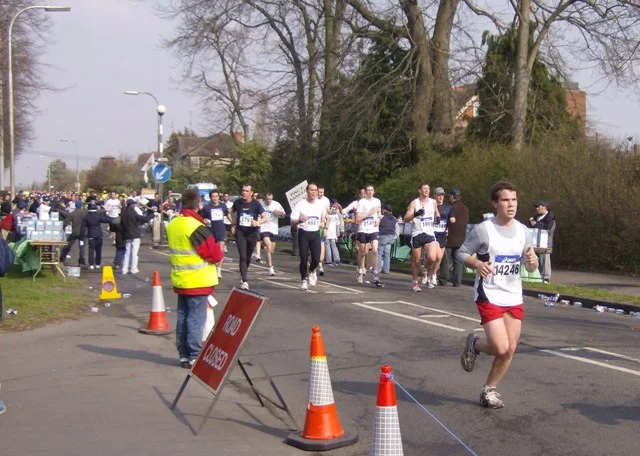
Iliotibial band syndrome (ITBS) is the leading cause of lateral knee pain in runners, accounting for up to 12% of all running injuries. It is notorious for being stubborn — many runners treat it incorrectly, return too soon, and find themselves stuck in a frustrating cycle of re-injury. Understanding the actual mechanism of ITBS (which differs from what most people believe) is essential to treating it effectively.
What Is IT Band Syndrome?
The iliotibial band is a thick band of connective tissue running from the hip (iliac crest) down the outer thigh to the shin (tibia). ITBS causes sharp or burning pain on the outside of the knee, typically appearing at a consistent point in a run — often around 20–30 minutes — and forcing you to stop.
The old explanation — that the IT band "rubs" over the lateral femoral condyle — is now largely rejected by sports science. Current understanding suggests that ITBS results from compression of the fat pad and connective tissue beneath the IT band against the lateral femoral condyle, not friction. This distinction matters for treatment: stretching and foam rolling the IT band itself does very little because the band is not the problem — the structures beneath it are. We cover this in depth in our Runner's Knee Guide: Causes, Self-Assessment, Rehab Exercises, and Prevention guide. We cover this in depth in our Ice Bath Recovery for Runners: Does Cold Water Immersion Actually Work? guide.
Common Causes of IT Band Syndrome in Runners
| Cause | Mechanism | Correction |
|---|---|---|
| Weak hip abductors/glutes | Increased hip adduction and knee valgus, raising IT band tension | Hip strengthening exercises (clamshells, hip thrusts) |
| Too-rapid mileage increase | Exceeds tissue tolerance before adaptation | Follow 10% weekly increase rule |
| Excessive downhill running | Knee flexion angle at landing maximizes compression | Reduce downhill running during recovery |
| Leg length discrepancy | Pelvic drop alters IT band tension | Orthotics or gait correction |
| Overpronation | Internal tibial rotation increases lateral knee stress | Motion control shoes or insoles |
What Actually Works for ITBS Treatment
Foam rolling the IT band feels satisfying but has limited therapeutic effect on ITBS, since the band itself is not the primary problem. Instead, foam rolling the glutes, TFL (tensor fasciae latae, at the hip), and quadriceps — the muscles that influence IT band tension — is more productive.
The most evidence-supported approach: 2–4 weeks of reduced or eliminated running, combined with hip abductor strengthening and addressing gait factors. Anti-inflammatory medications (NSAIDs) can reduce acute pain but do not address the cause. Corticosteroid injection can help in persistent cases but should not be a first-line treatment.
Hip strengthening protocol for ITBS: Clamshells (3 x 20), single-leg deadlifts (3 x 10 each leg), lateral band walks (3 x 15 each direction), hip thrusts (3 x 15). Perform 3–4 times per week. Most runners see significant improvement within 3–4 weeks of consistent hip work.
Return to Running After ITBS
Return to running should begin only when you are pain-free walking, going up and down stairs, and during a single-leg squat. Start with flat terrain, avoid downhills for the first 3–4 weeks back. Use run-walk intervals initially (2 minutes running, 1 minute walking) and increase running time only when each session is pain-free.
Gait adjustments can help: increasing cadence by 5–10% reduces knee flexion angle at landing and decreases IT band compression. A shorter stride with a higher cadence is protective for ITBS. For a broader recovery framework, see our complete running recovery guide.
Overlay Your Running Stats
Add your pace, distance, and heart rate to your running photos and videos — share your stats the way the pros do.
Try PaceOverlay Free →Frequently Asked Questions
How long does IT band syndrome take to heal?
Mild ITBS with early treatment typically resolves in 4–8 weeks. Chronic ITBS that has been pushed through for months can take 3–6 months of consistent rehabilitation. The single biggest predictor of recovery time is how long you continued running after symptoms began.
Does stretching the IT band help?
The IT band is a dense connective tissue structure — it does not stretch meaningfully. Classic IT band stretches (crossing one leg in front of the other and leaning sideways) provide minimal therapeutic effect on the band itself. Focus instead on loosening the TFL at the hip and strengthening the hip abductors.
Can ITBS cause permanent damage?
In the vast majority of cases, no. ITBS is a load-related injury that resolves completely with appropriate treatment. Rare chronic cases involving significant inflammation may benefit from a corticosteroid injection or, very rarely, surgical release — but the overwhelming majority of runners recover fully with conservative treatment.
Does running form affect IT band syndrome?
Yes significantly. Overstriding (landing with the foot far ahead of the body) increases knee flexion at contact and worsens IT band compression. Increasing cadence by 5–10 steps per minute is one of the most effective gait changes for ITBS. Running with a forward lean from the ankles (not the waist) also reduces the ground reaction forces that contribute to ITBS.
Final Thoughts
The most important thing about IT band syndrome runners is that it is learnable. The principles covered in this guide — from What Is IT Band Syndrome?, Common Causes of IT Band Syndrome in Runners — give you a proven framework to work from, regardless of your current fitness level.
Start with one change this week. Apply it consistently across a few runs, assess the results, and build from there. Running rewards patience and consistency more than any other input. Show up regularly, progress gradually, and the improvements follow.