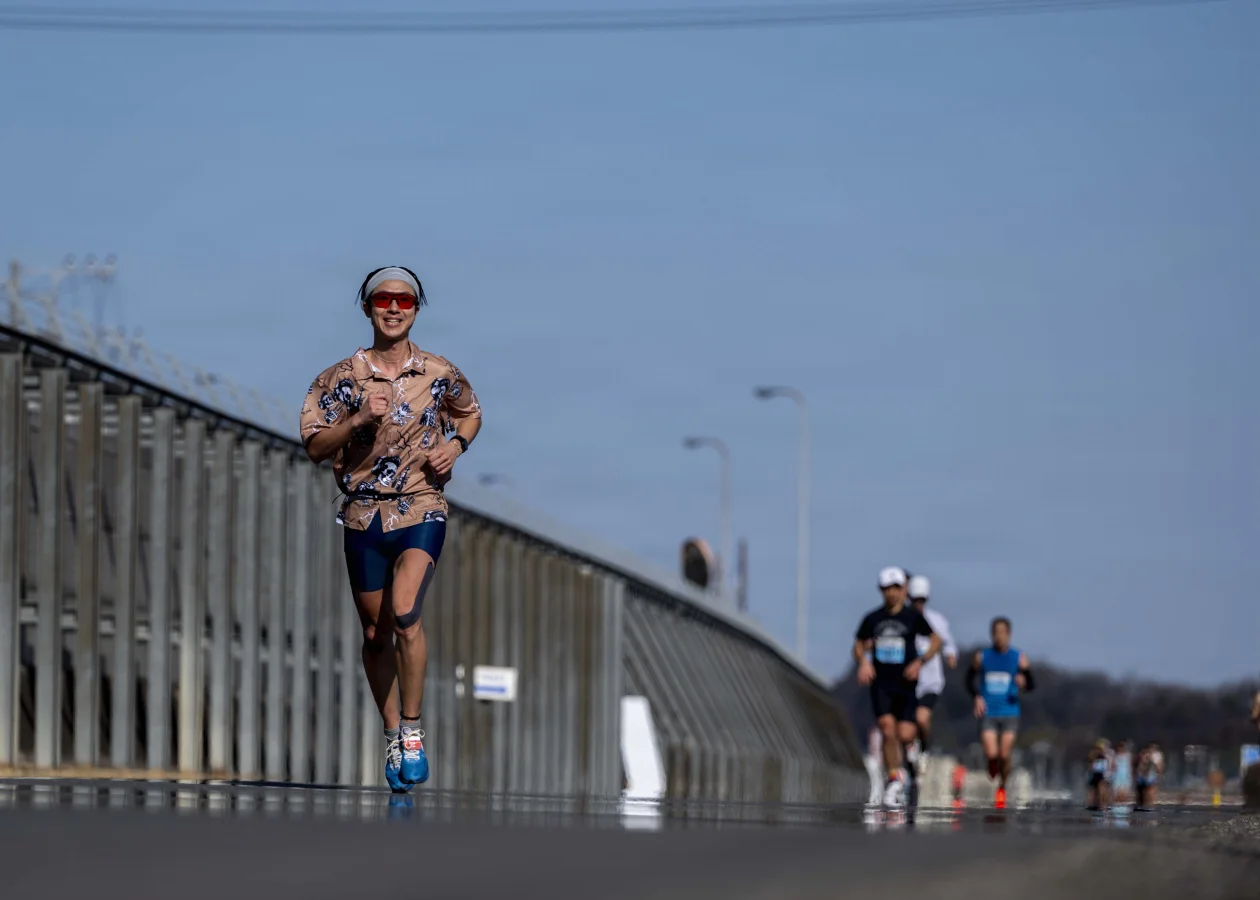
Improving your running form and posture is one of the highest-return changes a runner can make — better mechanics mean less wasted energy, lower injury risk, and faster times without running a single extra mile.
Head Position and Upper Body
Your gaze should land roughly 10–15 metres ahead on flat ground. Looking down cramps the neck and collapses your chest; looking too far up tightens the upper back. Keep your jaw relaxed — if your face is tense, tension travels into your shoulders and arms.
Shoulders should be low, back, and away from your ears. Roll them back and down before you start each run to reset the position. A relaxed upper body conserves energy over long distances.
Arm Swing
Your arms drive your legs — they are not just along for the ride. Bend your elbows to roughly 90 degrees and swing them forward and back (not across your body). Hands should be loosely cupped as if holding a potato chip without crushing it.
Crossing your arms over your centreline rotates your torso and forces your legs to compensate, wasting energy with every stride. Keeping your swing compact and controlled makes a noticeable difference over a 5 km or longer run.
Cadence and Foot Strike
| Runner Level | Typical Cadence (steps/min) | Target Range |
|---|---|---|
| Beginner | 150–160 | Aim for 160–165 |
| Intermediate | 160–170 | Aim for 170–175 |
| Advanced | 175–185 | Maintain or optimise |
Cadence — the number of steps per minute — has a bigger influence on efficiency than most runners realise. A low cadence often means overstriding, where your foot lands well ahead of your centre of mass and acts as a brake with every step. Increasing cadence by just 5–10% reduces that braking force significantly.
As for foot strike, a midfoot landing under your hips is generally safest. Heel striking is only problematic when combined with overstriding; forefoot striking works well at speed but stresses the calves during easy runs.
Common Mistakes and How to Fix Them
Tip: Record yourself running from the side and behind using your phone. Watching the footage for 60 seconds reveals overstriding, arm crossing, and trunk lean that you cannot feel in the moment.
- Overstriding: Land closer to your hips by increasing cadence slightly.
- Hunching shoulders: Do shoulder-roll resets every kilometre.
- Clenched fists: Shake your hands out at each mile marker.
- Head dropping: Pick a point on the horizon and check it every few minutes.
- Side-to-side sway: Strengthen your glutes and core to stabilise your pelvis.
Fixing form takes weeks of conscious practice. Work on one cue per run rather than trying to correct everything at once. For more foundational running advice, read our Beginner's Guide to Running.
Overlay Your Running Stats
Add your pace, distance, and heart rate to your running photos and videos — share your stats the way the pros do.
Try PaceOverlay Free →Frequently Asked Questions
What is the ideal running cadence for beginners?
Most beginners fall between 150 and 160 steps per minute. Gradually working toward 165–170 reduces overstriding and lowers injury risk without feeling unnatural. For more detail, see our guide to Interval Training for Beginners: How to Start and Why It Works.
Should I heel strike or forefoot strike?
A midfoot strike that lands under your centre of mass is generally most efficient for easy to moderate paces. Avoid a heavy heel strike with an extended leg — that is the combination that causes most impact-related injuries.
How long does it take to improve running form?
Expect four to eight weeks of consistent practice to make a new movement pattern feel natural. Drill one cue per week and use short video checks to monitor progress.
Final Thoughts
The most important thing about running form and posture is that it is learnable. The principles covered in this guide — from Head Position and Upper Body, Arm Swing — give you a proven framework to work from, regardless of your current fitness level.
Start with one change this week. Apply it consistently across a few runs, assess the results, and build from there. Running rewards patience and consistency more than any other input. Show up regularly, progress gradually, and the improvements follow.