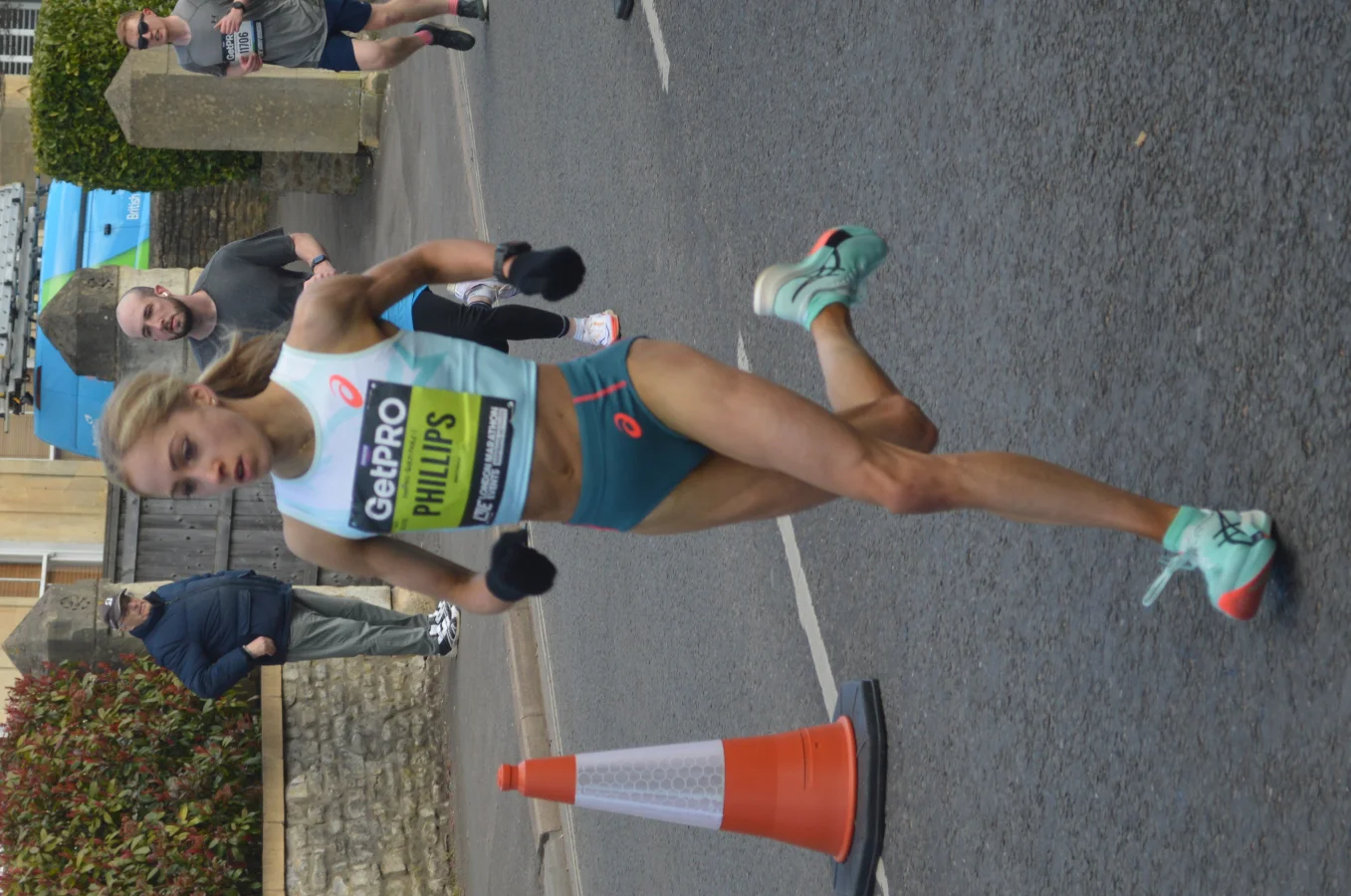
Running cadence for beginners is one of the most overlooked aspects of learning to run well. Simply put, cadence is the number of steps you take per minute (SPM), and getting it into a good range can reduce injury risk, lower energy waste, and make your runs feel easier — without spending money on gear or running faster.
What Is Running Cadence?
Cadence counts how many times your feet hit the ground each minute. If you take 80 steps with your left foot and 80 with your right in a minute, your cadence is 160 SPM. Most modern GPS watches and running apps measure this automatically, but you can also count manually: count every time your right foot lands for 30 seconds, then multiply by 4.
Cadence is closely related to stride length. At any given speed, a lower cadence means longer strides, and a higher cadence means shorter, quicker steps. The goal isn't to shuffle — it's to find the combination that minimises impact and maximises efficiency.
Elite marathon runners typically run at 180 SPM or higher. Recreational runners usually fall somewhere between 155 and 175 SPM. If you've never paid attention to cadence before, you might be surprised where yours lands.
Why Cadence Matters for Beginners
Most beginner runners overstride. Overstriding means landing with your foot well in front of your center of mass — usually with a straight or nearly straight leg — and it creates a braking force with every step. That braking force translates into extra stress on your knees, shins, and hips. It's a leading contributor to the most common beginner injuries: shin splints, runner's knee, and IT band syndrome.
Increasing cadence naturally shortens stride length and shifts where your foot lands. Instead of landing in front of your hips, your foot lands closer to underneath your body. This reduces impact forces significantly. Research published in the Journal of Orthopaedic and Sports Physical Therapy found that a 10% increase in cadence reduced loading on the knee by roughly 14%.
Higher cadence also tends to feel more energetically efficient once your body adapts. The initial adjustment is uncomfortable, but within a few weeks most runners report that runs feel lighter.
What Is a Good Cadence Target?
The frequently cited target of 180 SPM comes from observations of elite runners, but it's not a rigid rule for beginners. A more practical approach is to find your natural cadence, then work toward increasing it by 5–10% over several weeks.
| Cadence (SPM) | What It Often Indicates | Action |
|---|---|---|
| Under 155 | Likely overstriding, high braking force | Focus on shortening stride |
| 155–165 | Below average for recreational runners | Aim to improve by 5–8% |
| 165–175 | Solid range for most beginners | Maintain and refine form |
| 175–185 | Efficient range for recreational runners | Maintain, focus on other form cues |
| 185+ | Elite territory — may be too high for easy runs | Don't chase this as a beginner |
If you're currently at 158 SPM, aim for 165–168 over the next 4–6 weeks. Small, gradual increases are far easier to sustain than trying to jump straight to 180.
How to Improve Your Cadence
The most effective and beginner-friendly method is metronome running. Download a free metronome app on your phone, set it to your target SPM, and try to match each beat with a foot strike. Start with just 5–10 minutes at the higher cadence during a run, then return to your natural rhythm. Gradually extend the metronome segments week by week.
Music with the right tempo is a more enjoyable alternative. Spotify, Apple Music, and several running apps have playlists organized by BPM. A playlist at 170 BPM gives you a natural beat to match. Search "170 BPM running playlist" and experiment with different tempos until you find one that matches your target.
Form drills also help. High knees, butt kicks, and strides (short accelerations at a quick turnover) all train your neuromuscular system to move faster. Spend 5 minutes doing drills before two of your weekly runs and you'll notice adaptation within three to four weeks.
Quick Cadence Check: During your next run, count every right-foot strike for 30 seconds. Multiply by 4. That's your current cadence. If it's below 160, you have clear room to improve — and doing so can meaningfully cut your injury risk.
Tracking Cadence With a GPS Watch or App
Most modern GPS watches — Garmin, Coros, Apple Watch with a running app — display cadence as a live metric and log it after every run. If you don't own a GPS watch, many free phone apps like Strava or Nike Run Club calculate cadence using your phone's accelerometer when the phone is in your pocket or worn in an arm band.
After runs, review your cadence alongside pace and heart rate. You'll often notice that your cadence drops when you're tired or running uphill. These are useful signals. A tired runner with a dropping cadence is also increasing their injury risk — it's a good cue to finish the run or take a walk break.
Common Cadence Mistakes to Avoid
Don't try to increase cadence and distance at the same time. Changing your running mechanics is a stressor on its own. If you're working on cadence, keep your runs shorter and easier. Save the distance-building for weeks when you're not making form changes.
Don't obsess over the number at the expense of how you feel. Cadence is a useful guide, not a law. A runner who has a natural, efficient stride at 162 SPM doesn't need to force themselves to 180. Use cadence data as one signal among many, not the only thing you track.
Finally, don't ignore your footwear. Shoes with excessive heel cushioning can encourage overstriding regardless of cadence. A neutral shoe with moderate cushioning is typically a better fit for developing efficient form. See our Complete Beginner's Guide to Running for footwear recommendations.
Overlay Your Running Stats
Add your pace, distance, and heart rate to your running photos and videos — share your stats the way the pros do.
Try PaceOverlay Free →Frequently Asked Questions
What is a good running cadence for a beginner?
Most beginners fall between 155 and 170 SPM. A realistic goal is to get above 165 SPM, which reduces overstriding and lowers injury risk. You don't need to reach 180 SPM — focus on gradual improvement of 5–10% over several weeks.
Does running cadence change with speed?
Yes. Cadence naturally increases slightly as you run faster. When you sprint, your turnover quickens. At easy paces, cadence tends to be lower. This is normal. What you want to avoid at any pace is a very low cadence paired with a long, overstriding step.
How long does it take to improve running cadence?
Most runners notice meaningful improvement within 3–6 weeks of consistent metronome or music-guided practice. The neuromuscular adaptation happens relatively quickly, but it takes a few more weeks for it to feel natural at your easy running pace.
Can a GPS watch measure my cadence?
Yes. Most GPS watches from Garmin, Coros, Polar, and Apple (with running apps) measure cadence automatically using wrist-based accelerometers. Free apps like Strava can also estimate cadence using your phone's sensors when worn in a pocket or armband.
Final Thoughts
running cadence for beginners is one of the most evidence-backed ways to improve your running performance. The techniques and principles here — spanning What Is Running Cadence?, Why Cadence Matters for Beginners — give you everything you need to train smarter rather than just harder.
The biggest gains come from consistent, progressive application over weeks and months — not from any single workout. Use this guide as your starting framework, track your results honestly, and adjust based on what your body tells you.